Specification
Watts, efficiency basis, cell type, outline, connector, maximum system voltage.
Contractors often receive a module request after the roof or yard is already sketched. This checklist is the buyer-side list SolarSource Sourcing uses before factories are asked to price a commercial solar panel package. It does not replace the contractor’s license, the engineer’s stamp, or a utility study.
Write the application first: rooftop, canopy, or ground-mount. Then write rated power, module efficiency with the test basis, cell technology, dimensions, connector, and maximum system voltage. Quantity follows in modules, pallets, or MW. The US destination and the requested delivery window come next, still as buyer inputs.
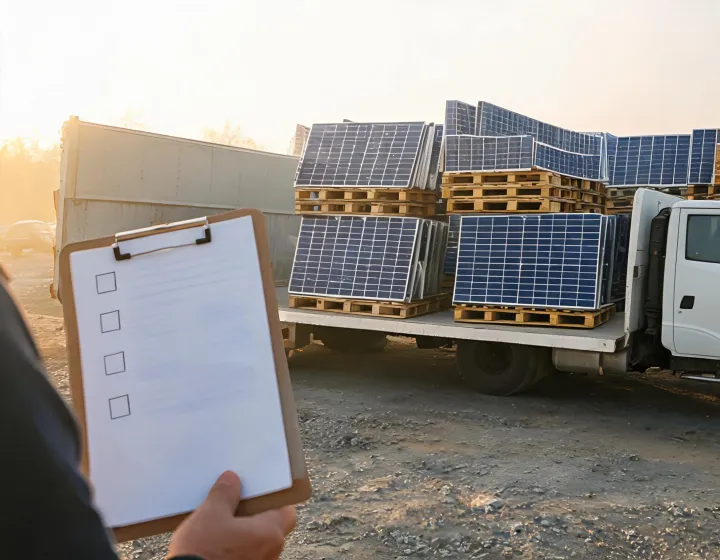
Watts, efficiency basis, cell type, outline, connector, maximum system voltage.
Base lot plus spares, with the unit written once.
Who ships, who unloads, which connectors are in the crate.
Datasheet and drawing of the quoted model, listing file if the jurisdiction asks.
Commercial solar panel contractors should ask for the datasheet, dimensional drawing, packing sketch, and applicable safety-listing or qualification-test records naming the model. ISO 9001, when requested, should name the supplier facility. The DOE design overview, accessed on 2026-10-26, introduces system components; it does not certify a shipment.
Open-circuit voltage, maximum power voltage, and string current are copied from that datasheet into the comparison sheet. They are not taken from a neighboring job.
String or central conversion can suit a wide unshaded roof. Module-level electronics can suit scattered shade and finer monitoring. The contractor records which path the design already uses. Unit price is compared only after freight, documents, and warranty text sit on the same row. This page lists the dimensions; it does not score a named factory.
Three limits follow every box: no model file means no technical match; this desk does not issue safety listings; watt class does not define pallet quantity or connector gender.
Hypothetical contractor packet: request 960 modules in a 545 W to 555 W band for a canopy, with racking and wire quoted as separate lines. Mark the connector series and mating details as unresolved, and state 10 weeks after drawing review as a requested window. Before award, match a sample's label, dimensions, and connector to the approved drawing and record the reviewer's acceptance or rejection. This is a procurement example, not a customer project, a verified product specification, or a delivery commitment.
Related pages: module rows, supplier matching, the form, and the procurement brief.
Paste the completed fields into the requirement box: specification, quantity, destination, and delivery window. The desk coordinates factory quotations and marks every blank that suppliers still need to answer.
Request Factory QuotesSourcing coordination
Eligible coordination may reach up to 3%.
Eligibility applies to qualified business buyers and is confirmed after we review your product, quantity, destination, and sourcing requirements.